Best VPN for streaming has become absolutely essential for anyone who values their online privacy while enjoying unlimited entertainment from around the world. Whether you’re using TiviMate for IPTV, accessing geo-restricted content, or simply want to protect your viewing habits from prying eyes, choosing the right VPN service makes all the difference between smooth, secure streaming and frustrating buffering with privacy concerns.
In today’s digital landscape, your Internet Service Provider monitors every single website you visit, every app you use, and every piece of content you stream. Without proper protection, this information gets logged, analyzed, and potentially sold to third parties or handed over to authorities. For IPTV enthusiasts and streaming fans, using a VPN isn’t just recommended it’s practically mandatory for maintaining privacy and accessing the content you want without restrictions.
Table of Contents
Why You Need the Best VPN for Streaming
Streaming without VPN protection exposes you to risks that most users don’t even realize exist. Your ISP actively tracks your streaming habits, building detailed profiles of what you watch, when you watch it, and how much bandwidth you consume. This data collection enables targeted advertising, potential bandwidth throttling during peak hours, and leaves you vulnerable to copyright enforcement actions.
When you use IPTV services or third-party streaming applications, these activities become visible to anyone monitoring your network traffic. ISPs have been known to throttle bandwidth specifically for streaming services, deliberately slowing down your connection to manage network congestion. This throttling causes buffering, reduced video quality, and an overall frustrating viewing experience.
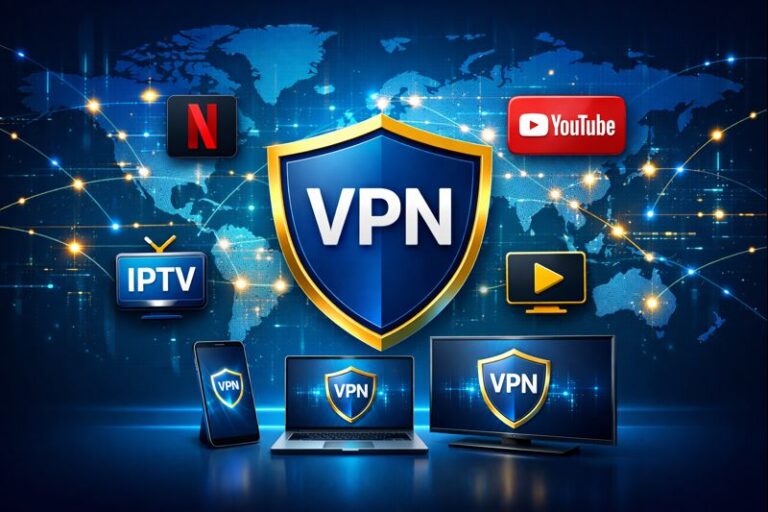
A quality VPN creates an encrypted tunnel between your device and the internet, making it impossible for ISPs, hackers, government agencies, or content providers to see what you’re doing online. Your real IP address gets masked and replaced with one from the VPN server location you choose, giving you both complete privacy and the ability to bypass geographic content restrictions effortlessly.
Key Features of the Best VPN for Streaming
Lightning-Fast Connection Speeds
Speed is absolutely critical when selecting a VPN for streaming purposes. Unlike basic web browsing, streaming high-definition video requires consistent bandwidth without interruptions. The best streaming VPNs utilize premium server infrastructure with high-speed connections that minimize speed loss while maintaining full encryption protection.
When you connect to any VPN, some speed reduction is inevitable due to the encryption process and routing through remote servers. However, top-tier VPN providers optimize their networks to keep this reduction minimal typically under fifteen percent. This means you can stream 4K content without buffering even while connected to a VPN server located on the other side of the world.
Server count matters tremendously for maintaining fast speeds consistently. Providers with thousands of servers across numerous countries distribute user load more effectively, preventing individual servers from becoming overcrowded during peak usage hours. This distribution becomes especially important during evenings and weekends when streaming traffic peaks globally.
Strict No-Logs Privacy Policy
The entire purpose of using a VPN for streaming collapses if the provider itself logs and stores your activity data. A strict no-logs policy means the VPN company doesn’t keep records of which websites you visit, which apps you use, what content you stream, or when you connect to their service.
Many VPN companies claim to have no-logs policies, but these claims mean nothing without independent verification. The best providers undergo regular audits by respected third-party security firms that verify their logging practices and privacy commitments. These audits provide actual proof that the company follows through on its privacy promises rather than just marketing claims.
Understanding what data a VPN provider does collect is equally important. Even strict no-logs providers may collect minimal data like email addresses for account management or aggregated bandwidth statistics for network optimization. The key distinction is between collecting data necessary for service operation versus logging individual user activity that could identify you.
Unlimited Simultaneous Connections
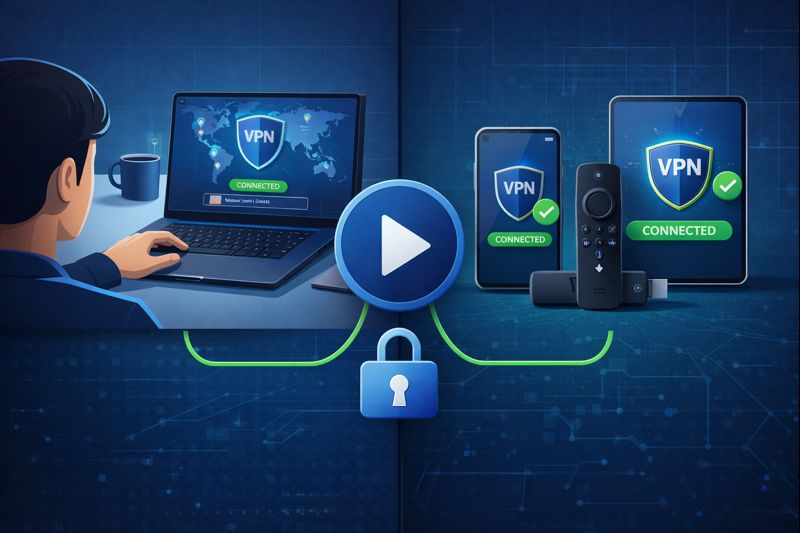
Modern households contain numerous internet-connected devices that all benefit from VPN protection. Your smartphone, tablet, laptop, desktop computer, smart TV, streaming box, and gaming console all transmit data that deserves privacy protection. Having a VPN that supports unlimited simultaneous connections means you can protect every device with a single subscription.
This unlimited connection capability provides exceptional value compared to services that limit you to five or ten devices. You can secure your entire family’s devices without purchasing multiple subscriptions or constantly disconnecting and reconnecting different gadgets. This feature becomes especially valuable for TiviMate users who might run the player on multiple devices throughout their home.
Some VPN providers offer native applications for all major platforms including Windows, macOS, Android, iOS, Fire TV, and Android TV. These dedicated apps provide optimized performance and easier setup compared to manual configuration. The best streaming VPNs ensure their apps work seamlessly with popular IPTV players like TiviMate without requiring complicated workarounds.
Geographic Restriction Bypassing
Content licensing agreements create artificial borders on the internet, making certain shows, movies, and services available only in specific countries. A VPN for streaming removes these restrictions by allowing you to connect to servers in different countries and access content as if you were physically located there.
Major streaming platforms like Netflix, Hulu, Amazon Prime Video, and Disney Plus all offer different content libraries depending on your location. The US Netflix library contains thousands more titles than libraries in other countries. By connecting to a US VPN server, you gain access to this expanded catalog regardless of your actual physical location.
IPTV services frequently face blocking attempts by internet providers and government agencies in various countries. Some regions implement aggressive content filtering that prevents access to certain streaming services entirely. A quality VPN circumvents these blocks by routing your traffic through servers in unrestricted locations, maintaining your access even when direct connections get blocked.
Setting Up Your VPN for Perfect Streaming
Choosing the Right Server Location
Server location selection significantly impacts your streaming experience in multiple ways. Connecting to servers closer to your physical location typically provides faster speeds since data travels shorter distances. However, your content access needs might require connecting to servers in specific countries regardless of distance considerations.
For accessing geo-restricted content, you need to connect to a server in the country where that content is available. If you want to watch BBC iPlayer, connect to a UK server. For US Netflix content, choose a US server location. Most quality VPN apps display server locations clearly and allow you to favorite frequently used locations for quick access.
Testing different servers within the same country often yields varying results. Major VPN providers operate multiple server clusters in populous countries, and these clusters can perform differently depending on their specific infrastructure and routing. If you experience slow speeds or connection issues with one server, try switching to another server in the same country.
Configuring VPN for TiviMate
TiviMate represents one of the most popular IPTV players available today, and using it with a VPN requires some specific configuration considerations. The best practice involves connecting your VPN before launching TiviMate to ensure all streaming traffic passes through the encrypted tunnel from the very start.
Some VPNs offer split-tunneling features that let you route specific apps through the VPN while others use your regular internet connection. For streaming security, you want TiviMate and any other IPTV applications to always route through the VPN connection. Configure your VPN app to either use full-tunnel mode or specifically include TiviMate in your split-tunnel configuration.
Auto-connect features ensure your VPN activates automatically when your device starts, preventing accidental streaming without protection. Configure your VPN app to connect automatically to your preferred server location on startup. This automation removes the risk of forgetting to connect before starting your streaming session.
For detailed guidance on using VPNs with TiviMate, check out our comprehensive guide on the best VPN for TiviMate which covers specific configuration recommendations and performance optimization tips.
If you’re setting up TiviMate on Windows, our step-by-step tutorial on how to install TiviMate on Windows 11 includes VPN setup instructions tailored specifically for Windows users.
Advanced VPN Features Every Streamer Needs
Kill Switch Protection
A kill switch represents one of the most critical security features for streaming VPN users. This function automatically cuts your internet connection if your VPN connection drops unexpectedly, preventing your real IP address from being exposed even momentarily during connection failures.
Without a kill switch, a temporary VPN disconnection could expose your streaming activity to your ISP or reveal your actual location to streaming services. This exposure defeats the entire purpose of using a VPN for privacy. Kill switches ensure complete protection by maintaining your privacy even during unexpected connection failures.
Application-level kill switches offer more granular control than system-wide kill switches. With application-level protection, you can specify that only certain apps like TiviMate get killed if the VPN drops, while other applications continue working normally. This prevents your entire internet connection from going down if you’re doing other tasks simultaneously.
DNS Leak Protection
DNS leaks represent a serious privacy vulnerability that many VPN users don’t even know exists. When you visit a website, your device needs to translate the domain name into an IP address using DNS servers. If these DNS requests bypass your VPN tunnel, they reveal every website you visit even though your actual traffic is encrypted.
Quality VPN providers implement DNS leak protection by forcing all DNS queries through their own secure DNS servers rather than allowing your ISP’s DNS servers to handle requests. This ensures complete privacy since your ISP cannot see which websites you’re accessing based on DNS lookups.
Testing for DNS leaks should be part of your VPN verification process. Numerous free online tools let you check whether your DNS requests are leaking outside your VPN tunnel. These tests show which DNS servers are handling your queries you should only see your VPN provider’s DNS servers, never your ISP’s servers.
Split Tunneling Capabilities
Split tunneling allows you to route some traffic through your VPN while other traffic uses your regular internet connection. This feature provides flexibility for scenarios where you need VPN protection for streaming but want maximum speed for other activities that don’t require privacy protection.
For streaming users, split tunneling enables you to protect your IPTV traffic with the VPN while allowing other applications to bypass the VPN entirely. This approach can improve overall performance since non-streaming traffic doesn’t consume VPN bandwidth or add encryption overhead unnecessarily.
Banking applications and certain secure websites sometimes block VPN connections or require additional verification when they detect unusual login locations. Split tunneling lets you exclude these specific applications from the VPN tunnel while keeping your streaming applications protected. This selective routing eliminates compatibility issues without sacrificing streaming privacy.
Troubleshooting Common VPN Streaming Issues
Fixing Buffering and Speed Problems
Buffering represents the most frustrating issue when streaming with a VPN. Several factors contribute to buffering, and identifying the specific cause helps determine the appropriate solution. Start by testing your internet speed both with and without the VPN connected to establish whether the VPN is actually causing the problem.
If your VPN connection shows significantly slower speeds than your base connection, try connecting to different server locations. Servers closer to your physical location typically provide faster speeds, though you might need distant servers for accessing specific geo-restricted content. Experiment with various servers in your target country to find the fastest performing option.
Protocol switching often resolves speed issues completely. WireGuard generally provides the fastest performance on modern VPN services with minimal speed impact. If your current protocol causes slowdowns, switch to WireGuard and test again. OpenVPN UDP offers good performance as a fallback option if WireGuard isn’t available.
Resolving Connection Failures
VPN connections occasionally fail to establish or drop unexpectedly during streaming sessions. These connection issues usually result from network configurations, firewall settings, or temporary server problems rather than fundamental VPN flaws that can’t be resolved.
Firewall and antivirus software sometimes block VPN connections thinking they’re suspicious traffic. Check your security software settings and create exceptions for your VPN application if necessary. Some corporate or institutional networks actively block VPN protocols if you’re streaming on such a network, you might need to use obfuscated servers.
Switching between VPN protocols can resolve connection failures caused by protocol-specific blocking or compatibility issues. If OpenVPN fails to connect, try WireGuard or IKEv2 instead. Different protocols use different ports and connection methods, so one might work perfectly in situations where others fail completely.
Bypassing VPN Detection
Streaming platforms constantly update their VPN detection systems, occasionally blocking access even when you’re connected to a VPN server in the correct country. These detection efforts target VPN IP addresses that have been identified and blacklisted by streaming services.
Trying different servers in the same country often bypasses detection since streaming services can’t blacklist every VPN IP address. If a US server gets detected, disconnect and connect to a different US server from your provider. VPN providers with large server networks give you more options for finding unblocked servers.
Some VPN providers offer specialized streaming servers specifically optimized for accessing platforms like Netflix, Hulu, or BBC iPlayer. These servers use regularly refreshed IP addresses and advanced techniques to avoid detection systems. Check your VPN app for streaming-specific server options if you’re consistently experiencing access blocks.
Choosing the Best VPN for Your Streaming Needs
Selecting the best VPN for streaming requires balancing multiple factors including speed, security, server network size, device compatibility, and pricing. The ideal choice depends on your specific needs regarding which content you want to access, which devices you stream on, and how much you’re willing to invest in privacy protection.
Premium VPN services deliver the best overall experience with fast speeds, reliable connections, extensive server networks, and robust privacy protection. While they cost more than budget options, the performance difference justifies the investment for serious streamers who demand consistent quality without buffering or connection drops.
Start with a VPN that offers a generous money-back guarantee so you can test performance with your specific streaming setup before committing long-term. Pay attention to speed test results, buffering frequency, and geo-restriction bypass success during your trial period. These real-world performance metrics matter far more than marketing claims and feature lists.
Your streaming privacy matters more than ever in an era of increasing surveillance and data monetization. Taking the time to properly configure and use a quality VPN protects your viewing habits from ISPs, advertisers, hackers, and government agencies while unlocking access to global content libraries. The small investment in VPN protection delivers tremendous value for anyone who takes their streaming privacy seriously.